 Curious Machines
Hearing & signal processing
See a voice become pulses.
Slow down a sound and watch the electrodes respond. Try the built-in sample, or use your microphone to see the pattern in your own name.
How it works
One word changes shape along the way.
- At the microphone
- Sound starts as changes in air pressure. A microphone converts them into an electrical signal. The speech processor separates the signal into frequency bands and tracks how much energy each contains.
- Across the skin
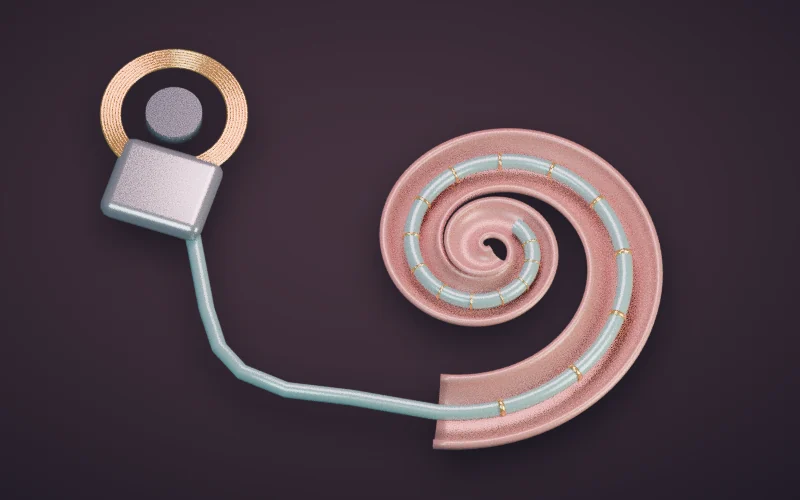
- An external transmitter sends coded information to an implanted receiver and stimulator. The stimulator drives contacts on an electrode array in the cochlea. Contacts near the entrance generally represent higher frequencies, with lower frequencies mapped farther inward.
- At the nerve
- Electrical pulses stimulate nearby auditory nerve fibers. The brain learns to interpret that activity. The exhibit lets you inspect one simplified encoding. Its audio is the input to the processor. A listener’s experience depends on their hearing, implant and programming.
Sources and further reading
Explore another exhibitHow does a voice cross the ocean?
→